Surgically induced astigmatism following manual small incision cataract surgery versus phacoemulsification in age-related cataract: a comparative analysis
Keywords:
Cataract, Corneal astigmatism, Phacoemulsification, Surgically induced astigmatism, Manual Small Incision Cataract SurgeryAbstract
BACKGROUND
Cataract surgery is among the most common and successful procedures globally.1,2 While phacoemulsification is the more advanced method, manual small incision cataract surgery (MSICS) remains prevalent in developing countries due to its affordability, shorter duration, and comparable visual outcomes.3-5 There is limited comparative data from Nigeria on corneal astigmatism and refractive stability between MSICS and phacoemulsification. This study aims to compare these outcomes between the two techniques.
MATERIALS AND METHODS
The study was a prospective hospital-based, comparative study of consecutive patients with age-related cataracts, randomized into 2 groups by randomly assigning letters A and B in a ratio of 1:1 to undergo MSICS (group A) or phacoemulsification (group B) using the superior approach, comparing the surgically induced corneal astigmatism (SIA) between the two techniques. SIA was calculated through vector analysis using the Warren Hill SIA calculator and the Holladay SIA method while stable corneal astigmatism was defined as average keratometry readings (average K in dioptres) within ± 0.50D6 and axis within 30 degrees of the last follow-up.7 The results were compared between the two groups, with a p-value of less than 0.05 indicating statistical significance. Ethical approval was obtained from the Lagos State University Teaching Hospital Health Research Ethical Committee (HREC) and written informed consent was obtained from the patients.
RESULTS
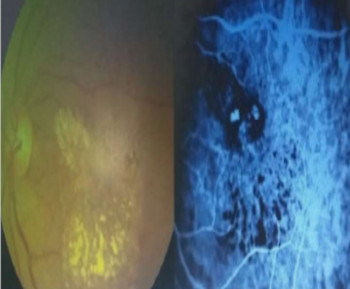
A total of 214 eyes were studied, with 107 in each surgical group. Age and gender distribution were similar (p=0.153 and 0.218) as seen in Table 1. Preoperative against-the-rule (ATR) astigmatism was more common in the phacoemulsification group (66.4%) than in the MSICS group (47.7%). By month 3, ATR astigmatism increased to 76.6% in the MSICS group compared to 49.5% in the phacoemulsification group. As shown in Table 2, the mean SIA in the MSICS group at months 1, 2 and 3 was 1.94D x 19.3o, 1.83D x 18.2o and 1.72D x 20.2o, respectively, while in the phacoemulsification group, the mean SIA was 0.92D x 17.7o, 1.01D x 16.4o and 1.00D x 15.8o at months 1, 2 and 3, respectively. SIA differed significantly between the two groups at all postoperative time points (p<0.001). Final best corrected visual acuity was similar at month 3, with 95.3% of MSICS and 98.1% of phacoemulsification patients achieving 6/12 or better (p=0.324). By the first postoperative month, 96 eyes (89.7%) in the MSICS group and 89 eyes (83.2%) in the phacoemulsification group had achieved stable corneal astigmatism. By the second month, stability was observed in 95 eyes (88.8%) of the MSICS group and 106 eyes (99.1%) of the phacoemulsification group (Figure 1).
DISCUSSION
This study found that postoperative ATR increased significantly among MSICS patients compared to phacoemulsification, a finding in line with earlier studies8,9 and likely due to larger incisions, wound construction, and cauterization in MSICS. Surgically induced astigmatism (SIA) was consistently higher in MSICS at all follow-up points, in line with previous evidence by Waghmare et al9, and Nair et al.10 Although more of the MSICS eyes stabilized by 1 month compared to phacoemulsification eyes, nearly all phacoemulsification eyes stabilized by the second month. Both procedures produced excellent visual outcomes, with over 96% of MSICS and 98% of phacoemulsification patients achieving 6/12 or better by three months. Nonetheless, phacoemulsification provided slightly better unaided visual acuity, reducing the likelihood of dependence on corrective lenses.
CONCLUSION
Phacoemulsification resulted in lower and more stable SIA. However, both techniques provided excellent final visual outcomes. While Phacoemulsification is more desirable, MSICS is relevant in resource-limited settings.
References
1. Lamoureux E, Fenwick E, Pesudovs K, Tan D. The impact of cataract surgery on quality of life. Curr Opin Ophthalmol. 2011;22(1):19-27.
2. Davis G. The evolution of cataract surgery. 1st ed. Missouri medicine; 2016. p. 58–62.
3. Arthur E, Sadik A, Kumah D, Osae E, Mireku F, Asiedu F, et al. Postoperative corneal and surgically induced astigmatism following superior approach manual small incision cataract surgery in patients with preoperative against-the-rule astigmatism. J Ophthalmol 2016:1-7. Available from https://onlinelibrary.wiley.com/doi/full/10.1155/2016/9489036.
4. Radwan A. Comparing surgical-induced astigmatism through change of incision site in manual small incision cataract surgery (SICS). J Clin Exper Ophthalmol 2011;02(05):159-161.
5. Charlesworth E, Alderson A, Juan V, Elliott D. When is refraction stable following routine cataract surgery? A systematic review and meta‐analysis. Ophthalmic Physiol Optics. 2020; 40(5):531-539.
6. Radwan A. Comparing Surgical-Induced Astigmatism through Change of Incision Site in Manual Small Incision Cataract Surgery (SICS). Journal of Clinical & Experimental Ophthalmology. 2011;02(05):159-161.
7. Wei Y, Chen W, Su P, Shen E, Hu F. The influence of corneal wound size on surgically induced corneal astigmatism after phacoemulsification. Journal of the Formosan Medical Association. 2012;111(5):284-289.
8. Gokhale N, Sawhney S. Reduction in astigmatism in manual small incision cataract surgery through change of incision site. Indian J Ophthalmol 2005; 53(3):201-203.
9. Waghmare R, Shinde C, Shirwadkar S. A Comparative study of pre- and post-operative refractive errors in cataract surgery- phacoemulsification vs. manual SICS in a tertiary care hospital. J Evid Based Med Healthcare. 2019; 6(51):3211-3215.
10. Nair N, Divya N, Panimalar V, Veeramani A, Bhaskaran B. Comparison of postoperative corneal astigmatism in phacoemulsification and manual small incision cataract surgery. Int J Curr Pharm Res. 2020; 12(6):85-88.
Additional Files
Published
How to Cite
Issue
Section
Categories
License
Copyright (c) 2025 Transactions of the Ophthalmological Society of Nigeria

This work is licensed under a Creative Commons Attribution-NonCommercial-NoDerivatives 4.0 International License.